Reagan Riddle the Roses Will Bloom Again
The following are ofttimes-sung Irish folk ballads and folk songs. The songs are arranged by theme under the categories "Politics and soldiering" and "Non-political" and are not necessarily contemporary to the events to which they relate.
Songs may fit into more i category, merely where possible, are grouped uniquely to where is most advisable.
Politics and soldiering [edit]
Anti-war and anti-recruiting [edit]
- "Arthur McBride" – an anti-recruiting song from Donegal, probably originating during the 17th century.[1]
- "The Recruiting Sergeant" – song (to the melody of "The Peeler and the Goat") from the time of World War 1, popular among the Irish Volunteers of that period, written past Séamus O'Farrell in 1915, recorded by The Pogues.[2] [3]
- "Mrs. McGrath" – popular among the Irish gaelic Volunteers, 1916[1]
- "The Saxon Shilling" – written by K. T. Buggy, 1840s[iv] [5]
- "Sergeant William Bailey" – written past Peadar Kearney, recorded by Dominic Behan[2] [5] and Maeve Mulvany Moore
- "Johnny I Hardly Knew Ye" – very old anti-war vocal[ane]
- "Join The British Regular army" – Irish insubordinate vocal most wanting to leave the British regular army
- "Who Is Ireland's Enemy?" - written by Brian O'Higgins in response to the First World State of war, this poem was one of the more visceral of the anti-recruitment literary response.
16th and 17th centuries [edit]
- "Alasdair MacColla" – vocal dating from the 1640s about warrior Alasdair MacColla. Still performed by Capercaillie[vi] and Clannad.
- "Follow me upwards to Carlow" – well-nigh Fiach MacHugh O'Byrne and the 2d Desmond Rebellion against Elizabeth I of England, written in the 19th century by P.J. McCall[7]
- "The Wood of Trugh" – concerning Eoin Roe O'Neill
- "Seán Ó Duibhir a'Ghleanna" (Irish: Seán O'Dwyer of the Glen) – an Irish-language song dealing with the aftermath of the Battle of Aughrim in 1691, Roud Index no. 16907. Translated past George Sigerson.[8]
- "Jackets Green" – written by poet Michael Scanlon about Patrick Sarsfield and the Flight of the Wild Geese[9]
- "The Battle of Benburb" – recalling the Boxing of Benburb fought on 5 June 1646 and concerning the exploits of Owen Roe O'Neill and his commanders. The song is most notably sung by Tommy Makem.
- "The Sash" – recalling the Boyne and other battles
- "On the green grassy slopes of the Boyne" – most the Battle of the Boyne
- "Carraigdhoun" (also "Carraig Donn", "The Lament of the Irish Maiden") – vocal about the 1690s Wild Geese written by Denny Lane (1818–95) in the 1840s.[10] Recorded by Mary O'Hara, the McPeake family (1960s) and Kathleen Behan (mother of Brendan, 1978) to the same melody every bit "The Mountains of Mourne."
- The Green Flag - written past Young Irelander, Michael Joseph Barry about the Irish Confederate Wars.
18th century [edit]
- "Clare's Dragoons"[11] – written by Thomas Davis about one of the divisions of the Irish gaelic Brigades.
- "Mo Ghile Mear – written by Seán Clárach Mac Domhnaill, it is a lament by the Gaelic goddess Éire for Bonnie Prince Charlie, who was so in exile.
- "Gaol of Clonmel" (also known as the "Jail of Cluain Meala" (sung by Luke Kelly) and the "Convict of Clonmel") – translation by Jeremiah Joseph Callanan of the Irish-language "Príosún Chluain Meala", a song from the fourth dimension of the Whiteboys[12]
1798 Rebellion [edit]
Songs relating to the Irish Rebellion of 1798 (though not necessarily contemporary):
- "Bagenal Harvey's Farewell (Bagenal Harvey's Lament)" – song about insubordinate leader Bagenal Harvey[13]
- "Ballyshannon Lane" – about a boxing between rebels and Hessians in 1798 in Wexford, written past Michael O'Brien, about 1896[xiv]
- "Billy Byrne of Ballymanus" – about ane of the leaders of the rebellion[xv]
- "Boolavogue" – song almost Begetter John Murphy, one of the leaders of the Wexford rebels, written by P.J. McCall (1861–1919) for the centenary ceremony in 1898[5]
- "Boys of '98" – modern vocal written by New York band Shillelagh Law
- "The Boys of Wexford" – written by P.J. McCall[16]
- "By Memory Inspired" – a tributary part-call of many of the insubordinate heroes who died in the rebellion, anonymous, recorded by Frank Harte[17]
- "Come up All Y'all Warriors (Father White potato) – vocal written close to the time of the rebellion upon which later songs such as Boolavogue were based.[xvi]
- "The Croppy Boy" – There are at least two songs by this name: "It was early, early in the spring..." and "Proficient men and true in this house...". They are concerned with the flow following the suppression of the rebellion and how the climate of repression saw relatives and close family deny whatsoever links to condemned rebels for fearfulness of being accounted guilty by association.[15]
- "Croppies Prevarication Down" – a Unionist or Orangeman'due south perspective on the rebels triumphant defeat[18]
- "Dunlavin Green" – a local ballad written in response to the Massacre of Dunlavin Green of 24 May 1798[vii]
- "General Munroe", "Henry Munroe", "Full general Munroe's Lamentation" and "Henry Joy" – all songs about the United Irish leader Henry Joy McCracken.[18]
- "The Heroes of '98" – patriotic song by Bruce Scott.
- "Irish Soldier Laddie" – modern song most the events of 1798, written by Paddy McGuigan of the Barleycorn
- "Jimmy Murphy" – song of music hall origin with distinctly unusual chorus
- "Kelly of Killanne" – ballad past P.J. McCall (1861–1919), recounting the exploits of John Kelly, i of the well-nigh popular leader of the Wexford rebels.[9]
- "The Liberty Tree" – anonymous United Irishmen ballad in praise of the French Revolution[5]
- "The Human being from God Knows Where" – poem by Florence Wilson (set to music past Tom Hickland of Five Hand Reel) about Thomas Russell, leader of the United Irishmen in Ulster, executed in Downpatrick in 1803[18]
- "The Retention of the Dead" – ballad recalling the rebellion'southward heroes past John Kells Ingram[five]
- "The Minstrel Male child" – in remembrance of a number of friends of Thomas Moore who lost their lives in the rebellion[xix]
- "The Rambler from Clare"[18]
- "Races of Castlebar", epic of French rider in the streets of Castlebar[ citation needed ]
- "The Rising of the Moon" – written by John Keegan Casey in the 1860s, this carol invokes the hope and optimism surrounding the outbreak of the Irish gaelic rebellion of 1798.[fifteen]
- "Roddy McCorley" – carol by Ethna Carbery lamenting the execution of the young Antrim Presbyterian rebel, Roddy McCorley.[15]
- "The Sean-Bhean bhocht" – the "poor old woman," i.e. Republic of ireland, is about to be liberated in tandem with the French; also known as "The French are on the Sea"[15]
- "Sliabh na mBan" – an Irish-language vocal composed by Michéal O Longáin of Carrignavar and translated by Seamus Ennis, about the massacre in July 1798 of a party of Tipperary insurgents at Carrigmoclear on the slopes of Slievenamon[18] [20]
- "Tone's Grave" – lament for Wolfe Tone, United Irish gaelic leader, the ballad is more commonly known as "Bodenstown Churchyard". Written by Thomas Davis, one of the leaders of Young Ireland motion.[9]
- "The Wake of William Orr"[18]
- "The Wearing of the Green" – vocal nearly repression later on the rebellion[9]
- "The Wind That Shakes the Barley" – a fellow'due south remorse at leaving his lady beloved to bring together the United Irishmen is cut short when she is killed past an English bullet (Roud Index 2994). Written by Robert Dwyer Joyce (1836–1883).[21] [22]
19th century [edit]
- "An Spailpín Fánach" (Irish: The Wandering Labourer), relating to the fourth dimension of the Irish gaelic Brigades in France. The air is "The Girl I Left Behind". Translated by George Sigerson as "The Roving Worker"[eighteen]
- "A Nation In one case Again" – 19th-century Irish gaelic nationalist canticle past Thomas Davis
- "Avenging and Bright" – patriotic song by Thomas Moore[xix]
- "Downward by the Glenside (The Bold Fenian Men)" – song by Peadar Kearney about the 19th-century Fenians
- "The Assuming Fenian Men" – vocal about the Fenians past poet Michael Scanlon, recorded by the Wolfe Tones
- "The Felons of Our Land" – written past Arthur Forrester of County Monaghan
- "The Fields of Athenry" – 1970s song by Pete St. John near the Great Irish Famine[1]
- "God Save Ireland"- Irish nationalist anthem, written by T. D. Sullivan in 1867 nearly the Manchester Martyrs
- "The Lament for Owen Roe" – Song by Thomas Davis, based on an older tune by Turlough O'Carolan, lamenting the death of Owen Roe O'Neill in 1649
- "Let Erin Remember" – written past Thomas Moore.[xix]
- "The Manchester Martyrs" – likewise called "The Neat of the Van", song about the Manchester Martyrs[xvi]
- "McCafferty" – a broadside ballad relating the truthful story of an Irish soldier who shot expressionless two of his British officers
- "The Harp that In one case Through Tara's Halls" – anthem of County Meath – 1 of Moore's Melodies[19]
- "Patrick Sheehan (The Glen of Aherlow)" – by Charles Kickham, based on the true story of an Irish soldier wounded in the Crimean War.[nine]
- "She Is Far From The State" – written by Thomas Moore.[19]
- Skibbereen (also called "Dear Old Skibbereen", "Revenge for Skibbereen" or "Call back Skibbereen") – a 19th-century song past Patrick Carpenter recalling the Irish Famine of 1845–1847.[23]
- "The West'southward Awake" – written by Thomas Davis.
- "O'Donnell Abu" – written in 1843 by Michael Joseph MacCann (1824–1883), well-nigh Rory O'Donnell, 1st Earl of Tyrconnell
- "Ye Men of Sweetness Liberties Hall" – written by Dubliner Zozimus (Michael Moran, 1794–1846)[24]
Napoleonic Wars [edit]
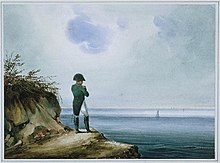
- "The Bonny Bunch of Roses"[18]
- "Bonny Light Horseman" – collected past Sam Henry and others, recorded by Frank Harte, Planxty, Dolores Keane & John Faulkner[25]
- "Eighteenth of June" – recorded past Frank Harte
- "Grand Conversation on Napoleon"[26]
- "Granuaile" – recorded by Frank Harte[26]
- "The Green Linnet"[26]
- "Isle of Saint Helena"[26]
- "Lonely Waterloo" – recorded by Frank Harte, Daithi Sproule[27]
- "Napoleon Bonaparte"[18]
- "Napoleon's Dream"[26]
- "Napoleon's Farewell to Paris" – recorded by Frank Harte[26]
- "Napoleon'due south Lamentation"[26]
- "My Love at Waterloo"
- "The Plains of Waterloo" – several songs past this proper noun,[18] including "Every bit I rode out one bright summertime's forenoon...", "On the fourteenth day of June, me boys...".
- "The Royal Hawkeye"[26]
- "Wounded Hussar"[28]
- "Welcome Napoleon to Erin" – recorded by Frank Harte[26]
The Groovy War 1914–1918 [edit]
- "The Connaght Rangers" – by Charles Martin.[29] Not to be confused with the song of the same proper noun by Brian Warfield which refers to the mutiny of the Outset Battalion of the regiment in response to the Irish state of war of independence.
- "Gallipoli"[thirty]
- "Salonika" – there were two Cork songs with this championship about the Irish serving in the British Army in the First World State of war, 1 for and one against. Jimmy Crowley collected the verses in his version from Mrs Ronayne of County Cork.[31] [32]
- "Recruiting Sergent"
1916 Ascent [edit]
- "Erin Become Bragh" – written in 1920 by Peadar Kearney, recorded by The Dubliners[two]
- "Arbour Loma" – about the burial place of 1916 leaders
- "Foggy Dew" – about the Easter Rising of 1916, written past Catechism Charles O'Neill about 1922.
- "Dying Rebel" – virtually the finding of a dying Irish rebel from County Cork in Dublin during the 1916 Easter Rising[33] It was recorded in 1961 past Patricia Blake and by Tommy Drennan and the Monarchs in 1966.[34]
- "James Connolly" – written by Patrick Galvin near James Connolly, labour leader[7]
- "Grace" – written by Frank & Sean O'Meara in 1985, named later on Grace Gifford, wife of 1916 leader Joseph Plunkett
- "Dublin City 1913" – the struggle from 1913 to 1916, written by Donagh MacDonagh[24]
- "Oró Sé do Bheatha 'Bhaile" – originally a jacobite tune, information technology later on received new verses and was popularised by nationalist poet Padraic Pearse[ane]
War of Independence [edit]
- "Ashtown Road" – a song about an deadfall in Dublin in which an IRA Volunteer, Martin Barbarous, died. Recorded past The Wolfhound (singer Ray McAreavey) in 1972.[35]
- "Amhrán na bhFiann" – or "the Soldiers Song", Irish Volunteers anthem, since 1927 the national anthem of the Irish Free Land/Republic of Ireland[i]
- "The Ballad of Michael Collins" – poetic ballad by Brendan O'Reilly[36]
- "The Boys of Kilmichael" – carol about the Kilmichael deadfall of 1920
- "The Boys of the Canton Cork" – written past Tom Spud[two]
- "The Boys of the One-time Brigade" – nostalgic ballad which shares the melody of "Wrap the Light-green Flag Round Me, Boys" almost the "one-time IRA" written by Paddy McGuigan of the Barleycorn[1]
- "The Broad Blackness Brimmer – written by Art McMillan from Belfast in praise of the IRA during the War of Independence 1919–21 and specifically the IRA of the Civil War and later on.[1] Recorded past the Barleycorn, the Wolfe Tones and others.
- "Come Out Ye Black and Tans" – British Army-taunting song written past Dominic Behan
- "Dark Equus caballus on the Wind" – poetic ballad past Liam Weldon
- "The Green Forest of Drumboe" – composed in 1974 past Eamonn Monaghan[37]
- "Kevin Barry" – virtually immature medical student and Irish revolutionary Kevin Barry controversially executed during the Irish War of Independence[7]
- "The Homo from the Daily Post" – song composed around 1918–nineteen mocking British media coverage of Ireland, to the air of "The Darlin' Girl from Clare"
- "The Merry Ploughboy" – written by Jeremiah Lynch to melody of "The Jolly Ploughboy"[2]
- "Only Our Rivers Run Complimentary" – written by Mickey MacConnell[one]
- "Pat of Mullingar" – song virtually an Irish Insubordinate from Mullingar
- "The Big Fellah", song well-nigh the life of Michael Collins, written by Larry Kirwan, in 1994 Album, "Home of the Dauntless" past Celtic Rock Group Blackness 47.
- "The Rifles of the IRA" – vocal disparaging the Black and Tans and praising the IRA
- "Seán Treacy" – carol nigh Seán Treacy, leader of the Third Tipperary Brigade, IRA, who was killed in Dublin in 1920[38]
- "Some Say the Divil is Dead" – satirical song about the British Ground forces
- "The Station of Knocklong" – song about the rescue of Seán Hogan by his colleagues from the Third Tipperary Brigade with the assistance of the East Limerick Brigade, from a guarded train in May 1919.[39]
- "The Upton Deadfall" – vocal about the Upton Railroad train Ambush which took place on xv February 1921.
- "The Valley of Knockanure – the name of several songs, one by Bryan MacMahon, about an incident in 1921[i]
- "The Woodlands of Loughglinn" – about the shooting of 2 local IRA men by the Blackness-and-Tans at Loughglinn, written by Mary-Anne Regan from Kilgariff, Castlerea, recorded past Brendan Shine, amongst others
- "Shanagolden"– a song inspired past the life of Tom Madigan, an Irish Volunteer from Shanagolden, written by Sean McCarthy
Ceremonious War and postal service-Treaty Republicanism (1922-1969) [edit]
- "Accept It Down from the Mast" – anti-Treaty song written by James Ryan in 1923, and later on re-written by Dominick Behan, about the Irish gaelic Civil State of war, to the tune of Red River Valley[twoscore] [41]
- "Soldiers of '22" - written by Brian O'Higgins commemorating the Republican soldiers during the Irish Civil War
- "Galtee Mountain Boy" – the original three verses were composed by Patsy Halloran, with a 4th verse later added by Christy Moore. The song has been recorded by many artists including Christy Moore, The Wolftones, and Paddy Reilly. The song tells the story of young volunteer who joined a flight column during the war of independence and was afterward captured and sentenced to die by Free Staters in the Civil War.[42]
- "Drumboe Martyrs" (or "Drumboe Castle") – written near a Civil War incident by Michael McGinley (1853–1940) of Ballybofey.[15] [37]
- "The Quondam Alarm Clock" – vocal by Phil Kelly about the Demolition Campaign (IRA) of 1939, to the tune of "The Garden Where the Praties Abound".[2]
- "England's Gallows Tree" - written by Brian O'Higgins about Peter Barnes and James McCormack who were hanged in 1940 during the IRA S-Program
- "The Patriot Game" – written by Dominic Behan nearly Fergal O'Hanlon killed in action during the IRA border campaign of 1956–62.[1] [2]
- "Sean S of Garryowen" – about Seán South, killed in the same incident as O'Hanlon[1]
- "Sean Due south of Limerick" – another song most Seán South, written by Dominic Behan[43]
- "4 Light-green Fields" – 1967 folk song, an allegory about partition by Tommy Makem[1]
The Troubles (1969–98) [edit]
- "The Ballad of Aidan McAnespie" – song virtually a immature Catholic human, shot by a British soldier while walking to a Gaelic football match, at Aughnacloy border checkpoint in County Tyrone.[44]
- "The Ballad of Billy Reid" – song recorded by the Wolfe Tones, Shebeen, and others, almost Conditional IRA member Billy Reid (killed in May 1971).[45]
- "The Ballad of Ed O'Brien" – vocal about Edward O'Brien who died in a bus explosion in London.
- "The Ballad of Joe McCann" – song by Brian Moore ("Whoriskey") about the assassination of the Official IRA activist, performed past Belfast band Men of No Property.[46]
- "The Ballad of Joe McDonnell" – song about hunger striker Joe Mcdonnell, written by The Wolfe Tones.
- "Ballad of Mairéad Farrell" – song by Seanchai & The Unity Squad about Mairéad Farrell and two IRA members killed in 1988 in Gibraltar by the SAS.[47]
- "Birmingham Half dozen" – song about those wrongly defendant of the Birmingham bombings in England in 1974.
- "Bring Them Home" - song most sisters Doloures and Marian Price, Irish gaelic republicans imprisoned for the 1973 One-time Bailey bombing.
- "Freedom's Sons" – written past Tommy Makem.
- "Gibraltar 3" – song past Andy O'Donnell, performed by the Fianna, in memory of the Gibraltar Three.
- "Enniskillen – At The War Memorial" – song virtually the Enniskillen Remembrance Solar day bombing of 1987
- "Fightin' Men of Crossmaglen" – most Southward Armagh republicans
- "Requite Me Your Paw" (Tabhair dom practise Lámh) – words of reconciliation composed by Brian Warfield of the Wolfe Tones in 1974 to a 17th-century melody by Ruairí 'Dall' Ó Catháin
- "Freedom Walk"
- "Continue Home British Soldiers"
- "The Lambeg Drummer"
- "My Piddling Armalite – early on 1970s militant republican song
- "Loughall Martyrs" – song about 8 IRA men at Loughgall in 1987
- "The Men Behind the Wire" – 1970s song well-nigh internment in Northern Ireland, equanimous by Paddy McGuigan of the Barleycorn
- "Rock on Rockall – likewise known as "You'll go F'All from Rockall" – a satirical song from the Wolfe Tones, about Rockall, an Irish island disputed by Britain, Denmark and Iceland.
- "Roll of Honour" – Republican song about the hunger strike of 1981 Written and performed by the Irish gaelic Brigade
- "Rubber Bullets for the Ladies" – 1970s song almost the British Regular army in Northern Ireland
- "SAM Song" – song praising the Provisional IRA and their acquisition of surface to air missiles Written and performed past the Irish Brigade
- "Say Hello to the Provos" – PIRA song
- "There Were Roses" – song by Tommy Sands that portrays a tragic story of two friends
- "The Boondocks I Loved So Well" – 1980s vocal nigh the impact of The Troubles in Derry (Composer: Phil Coulter)
- "Up the Rebels" – too known as "Teddy's Head" due to a line in the chorus, song most the partition of Ireland.
- "The Winds Are Singing Liberty" – written past Tommy Makem
Not-political [edit]
Miscellaneous and uncategorised [edit]
- "The Dawning of the Day" – 19th-century vocal also known as "Fáinne Geal an Lae"
- "Éamonn an Chnoic" (Ned of the Hill) – virtually an Irish blueblood dispossessed of his land by the English in the 17th century.
- "Donegal Danny" - about an Irish sailor who tells the tale of a fishing gunkhole disaster in which he was the sole survivor.
- "Down by the Sally Gardens" – based on a poem by W.B. Yeats, which in plow was based on a song he heard in his childhood.
- "The Gypsy Maiden" – words and music past Dick Farrelly. Recorded past Sinead Stone & Gerard Farrelly and The Bards.
- "The Hat My Begetter Wore" – written in the 19th century by Johnny Patterson[48]
- "I'll Tell Me Ma" – a children's song
- "Too-Ra-Loo-Ra-Loo-Ral (That'southward an Irish gaelic Lullaby)" – written in the 1890s by James Royce Shannon, and made famous by Bing Crosby
- "A Longford Legend"
- "Mother Macree"
- "Maggie" – also known as "Nora", modern words by Seán O'Casey
- "Molly Durkin"
- "The One-time Bog Route" – a verse form by Teresa Brayton from Kilcock, Canton Kildare, set to music past Madeline King O'Farrelly from Rochfortbridge, County Westmeath.[49]
- "Ride On" – a 1980s song most identified with singer Christy Moore; written by Jimmy McCarthy[7]
Piece of work and industry [edit]
- "Dan O'Hara" – written and recorded by Delia White potato.[50]
- "Hot Cobblestone" – song about Irish gaelic navvies in Britain. The original version was a humorous song. Information technology was re-written with new words in 1959 by Ewan MacColl as part of his Radio Ballads. Recorded by The Dubliners and Frank Harte
- "McAlpine's Fusiliers" – song of the gangs of London navvies, written by Dominic Behan, made famous by The Dubliners[i]
- "Molly Malone" – anthem of Dublin (dates from the 19th century).[51]
- "Paddy on the Railway" – a compilation of verses of Irish gaelic work songs sung in England and the Us[ane]
- "Missing You" – a popular Christy Moore song about the forgotten emigrants who worked in England during the 1980s. Written past Jimmy MacCarthy[seven]
- "The Cobbler" – Irish version of a song as well called "Dick Darby", collected by Sam Henry and others[21] [25]
- "Building up and tearing England down" – Song virtually Irish workers in British infrastructure, written by Brendan Behan and popularised by The Dubliners
Honey and romance [edit]
These songs can be grouped as: aislings, cleaved token songs, night visiting songs, modern songs, etc.
- "The Agricultural Irish Girl" – words and music by J F Mitchell, 1885, probably composed in America. Recorded past Val Doonican, among many others.[15]
- "A Kiss in the Morning Early" – a song that goes dorsum to the 19th century, recorded by Mick Hanly in 1976 and Niamh Parsons in 2002.[15]
- "A Stór mo Chroí" (Irish for "Darling of my Heart") – recorded by Sarah & Rita Keane (1960s, on Claddagh), Dervish, Bonnie Raitt, Nora Butler and others
- "The Banks of the Roses"[ane]
- "The Banks of the Bann" – a broadside ballad to the melody of the Irish hymn "Be G My Vision". The hymn ("Bí Thusa 'mo Shúile") was translated from Erstwhile Irish gaelic into English by Mary Elizabeth Byrne, in Ériu (the journal of the School of Irish Learning), in 1905. The English text was first versified by Eleanor Hull, in 1912. The ballad is too chosen "The Brownish Girl" and found in a number of variants.[52]
- "The Black Velvet Ring" – Irish version of a broadside ballad dating dorsum to the early 19th century[53]
- "The Blooming Flower of Grange" – a beloved song from Wexford, recorded by Paul O'Reilly in Waterford in 2007.[54]
- "Connemara Cradle Vocal" – written and recorded past Delia Murphy[50]
- "Courtin' in the Kitchen" – an old Dublin vocal recorded past Delia Irish potato, amidst others[l]
- "Come With Me Over The Mountain", besides known as "O'er the Mount" – recorded by Wexford traditional singer Paddy Berry in 2007.[54]
- "Danny Boy" – one of the nearly popular Republic of ireland-related songs, though the lyrics were written by an Englishman and only later on set to an Irish melody[55]
- "Easy and Irksome" – a Dublin song of somewhat constant innuendo[24]
- "Eileen Oge" – by Percy French, also played every bit a reel[56]
- "The Ferryman" – by Pete St. John, set up in Dublin
- "The Flower of Magherally"[16]
- "The Forgetful Sailor" – also known as "Johnny Doyle" and "George'due south Quay"[xv]
- "The Galway Shawl" – collected by Sam Henry in Dungiven in 1936[57]
- "The Garden Where the Praties Grow" – written in the 19th century by Johnny Patterson[48]
- "Ceol an Ghrá", Republic of ireland's 1972 Eurovision entry
- "The Girl from Donegal" – beginning recorded by Bridie Gallagher and later used equally her nickname
- "The Golden Jubilee" (or "50 Years Ago") – recorded by Connie Foley and Dorothy McManus in the 1940s and afterwards by Sean Dunphy.[58]
- "Adieu Johnny Dear" – written in the 19th century by Johnny Patterson[48]
- "The Holland Handkerchief" – an Irish gaelic version of The Suffolk Miracle (Child #272), sung past County Leitrim singer Mary McPartlan, Connie Dover and others[59] [lx]
- "I Am Stretched on Your Grave" – translation of a 17th-century Irish-language poem, "Táim Sínte ar do Thuama", start recorded by Philip Rex, later on by Sinéad O'Connor.[61]
- "If I Were a Blackbird" – an former song recorded by Delia Tater.[50]
- "The Inside Car" – a dainty song of infatuation from Wexford.
- "He Rolled Her to the Wall" – a riddle vocal recorded by bodhrán-player and vocaliser Cathie Ryan.
- "Killyburn Brae" – Irish version of "The Farmer'southward Curst Wife" (Child #278)[62]
- "The Lass of Aughrim" – an Irish gaelic version of Lord Gregory (Child #76), used past James Joyce in The Dead[63]
- "The Last Rose of Summer" – written in 1805 by Thomas Moore
- "The Beloved Token" – an onetime song of truthful love recorded by sean nós vocalizer MacDara Ó Conaola, among others.
- "Beloved'southward Old Sweet Vocal" – published in 1884 by composer James Lynam Molloy and lyricist G. Clifton Bingham. Recorded by John McCormack (1927), Brendan O'Dowda, Richard Tauber and many others; sung by Molly Blossom in Ulysses.
- "The Maid from Ballygow" – recorded by Paddy Drupe in Waterford, 2007.[54]
- "Mary from Dungloe", namesake for the popular festival.
- "The Mantle Then Green" – also known as the Drape of Light-green, a seminal broken token ballad.
- "My Lagan Love" – words by Joseph Campbell (1879–1944) to a traditional air, recorded by Eileen Donaghy. Also bundled by Herbert Hughes.[64]
- The Moorlough Shore (Roud 2742) – 19th-century vocal recorded by Dolores Keane, Paddy Tunney, Boys of the Lough and others.[65]
- "My Singing Bird"
- "Siúil A Rúin" (Irish for "Walk, my honey") – a macaronic dearest song, one of the most widely-sung Irish gaelic songs, recorded by dozens of artists both in Ireland and away.
- "The Spinning Wheel" – written in the 19th century by John Francis Waller and recorded by Delia Tater.[l]
- "Nancy Spain" – written by Barney Rush from Dublin, recorded by Christy Moore[seven]
- "The Nightingale" – Irish version of a vocal dating from the 17th century (Laws P13), recorded by Liam Clancy[66]
- "Noreen Bawn" – a song, written and composed past Neil McBride from Creeslough, Donegal that was made famous past Bridie Gallagher and Ann Breen, recorded past Daniel O'Donnell.[67]
- "On Raglan Route" – Patrick Kavanagh verse form to the 19th-century tune "The Dawning of the Twenty-four hours"[1]
- "The Old Plaid Shawl" – written by Francis Arthur Fahy, recorded by Willie Brady among others.[68]
- "The Old Rustic Bridge by the Manufactory" – written by Thomas P. Keenan from Castletownroche, recorded by Foster and Allen, amidst others[67]
- "Peigín Leitir Móir" – an Irish gaelic-language song from Galway.[69]
- "The Rose of Inchicore" – written by Dublin vocalist/songwriter Mick Fitzgerald
- "The Rose of Tralee" – a 19th-century Kerry vocal credited to C. (or E.) Mordaunt Spencer with music past Charles William Glover[9]
- "The Rose of Clare" ("Lovely Rose of Clare") – written by Chris Brawl[67]
- "The Rose of Mooncoin" – a Kilkenny song, written in the 19th century by a local schoolteacher and poet named Watt Potato[9]
- "The Rose of Slievenamon" – Recorded by Joseph Locke. Composed by Irish songwriter Dick Farrelly.
- "She Moved Through the Fair" – a traditional tune collected in Donegal, lyrics past poet Padraic Colum[1]
- "Single Once again" – also known as I Wish I Was Single Again.
- "Songs of Love" – 1990s vocal by The Divine Comedy (theme music of Male parent Ted. Composer: Neil Hannon)
- "Star of the Canton Downward" – written by Cathal McGarvey (1866–1927), almost a immature man falling in love with the canton's most beautiful lass. "My Love Nell" and other songs are besides sung to the same air.
- "The Star of Donegal" – an old song recorded past Delia White potato.[50]
- "The Star of Slane"[xv]
- "The Helm with the Whiskers" – an quondam vocal recorded by Delia Murphy.[50]
- "Molly Bawn" – tragic story nearly a homo who shoots his immature lover[70]
- "Thank you Ma'am, Says Dan" – an sometime song recorded by Delia Murphy.[50]
- "We Dreamed our Dreams" – song of a love lost; Composer: Dick Farrelly.
- "When a Man'south In Love" – by 19th-century Antrim poet Hugh McWilliams, recorded by Seán Cannon.[71]
- "The Whistling Gypsy" – equanimous past songwriter Leo Maguire in 1952 and first recorded in that yr by Joe Lynch on the Glenside label, and by Rose Brennan for HMV in London, in October 1953.[72]
- "Mayo Moon" - written by Enda Mulloy in London, composed and performed by The BibleCode Sunday 2006 from the anthology "Boots or no Boots"
Places, emigration and travel [edit]
- "Annaghdown" – recorded by Sinead Stone & Gerard Farrelly. Composed by Dick Farrelly.
- "Are Ye Right In that location Michael" – comic 19th-century song about a slow train on a W Clare Railway that left the composer late for a concert (composer: Percy French)[56]
- "As I Roved Out" – there are several different songs by this name, recorded by the Clancy Brothers and Planxty, among others[seven]
- "Ballymilligan" – by Percy French[56]
- "The Auld Triangle" – written by Dominic Behan for his blood brother Brendan, and featured in Brendan's play The Quare Young man, recorded by The Dubliners and The Pogues
- "The Bard of Armagh" – a 19th-century Dublin broadside ballad, traditionally associated with Bishop Donnelly (1649–1716); recorded by John McCormack, Margaret Barry and the Clancy Brothers.[73]
- "Dorsum Home in Derry – by Bobby Sands[7]
- "Beautiful Bundoran" – performed by Sinéad O'Connor in the moving-picture show The Butcher Boy
- "Biddy Mulligan the Pride of the Coombe" – about a Dublin woman from the Coombe, popularised by Jimmy O'Dea.
- "Bridget Donoghue" – written in the 19th century past Johnny Patterson[48]
- "The Boys from the County Armagh" – written by Thomas P. Keenan, fabricated famous by Bridie Gallagher[74]
- "Bunclody"- by Luke Kelly
- "Carraigfergus" – a translation of an Irish gaelic-linguistic communication vocal from Munster, referring to Carrickfergus
- "Cliffs of Dooneen – popularised by Planxty[7]
- "Come Back Paddy Reilly to Ballyjamesduff" – by Percy French[56]
- "Cottage by the Lee" – words and music by Irish songwriter, Dick Farrelly.
- "The Creggan White Hare" – song set in Creggan, County Tyrone, from a poem by John Graham, Roud Alphabetize no. 9633.[75]
- "The Cruise of the Calabar" – by Arthur Griffith[24]
- "The Curragh of Kildare" – old song mentioning the Curragh, collected by Petrie, Joyce and others, popularised by The Johnstons and Christy Moore.[76]
- "Daffodil Mulligan (Fresh Fish)" – written by Harry O'Donovan, music by Eva Brennan, about Biddy Mulligan'due south daughter.
- "Days in Old Donegal"
- "Down by the Liffeyside (Fish and Chips)" – written by Peadar Kearney[24]
- "Dublin City in 1962" – written by musician and footballer Dermot O'Brien
- "Dublin in my Tears" – written by Dubliner Brendan Phelan and recorded by the Dublin City Ramblers[24]
- "Dublin in the Rare Old Times" – 1980s song most Dublin before the 1960s (composer: Pete St. John)[1]
- "The Dublin Saunter (Dublin Can Be Heaven)" – past Leo Maguire, made famous by Noel Purcell[77]
- "The Emigrant'southward Letter of the alphabet" – written by Percy French[56]
- "The Emigrant's Story" – written by Paul Kealy, about an Irish gaelic emigrant leaving habitation & his loved ones in the 2010s.
- "Erin Go Bragh" – nigh an emigrant Irishman's experience in Scotland, recorded by Dick Gaughan
- "Fairytale of New York" – near emigration (1988 song by The Pogues and Kirsty MacColl. Composer: Shane MacGowan)
- "Goodbye to Carlingford - about Carlingford Lough, Canton Louth.
- "Fare Thee Well, Enniskillen" (The Enniskillen Dragoons) – about the regiment from Enniskillen[21]
- "From Clare to Here" – virtually emigration, by Ralph McTell[1]
- "The Flying of Earls" – song by Liam Reilly, formerly of Bagatelle, about the Irish diaspora leaving in the 1950s and 1960s to search for work; recorded by the Wolfe Tones and past the Dublin Metropolis Ramblers.
- "Galway Bay" – the proper noun of two songs, one written by Francis Arthur Fahy of Kinvara, and one written by Dr. Arthur Colahan and popularised past Bing Crosby.[68] [78]
- "Gleanntáin Ghlas' Ghaoth Dobhair" – a song of emigration written past Francie Mooney[79]
- "Goodbye Johnny Dear" – song fabricated pop by Bridie Gallagher in 1950s
- "Goodbye Mick (Leaving Tipperary)" – recorded by P.J. Murrihy and past Ryan's Fancy[9]
- "Gortnamona" – by Percy French (his favourite song)[56]
- "Green Fields of Gaoth Dobhair" – recorded by Clannad in 1982
- "Light-green Glens of Antrim"
- "Middle of Donegal"
- "Heaven Around Galway Bay"
- "The Hills of Donegal" – written in 1900 by Neil McBride, recorded later by Bridie Gallagher[80]
- "The Homes of Donegal" – written past local teacher Seán McBride (1902–1996) in 1955, start recorded by Charlie Magee (his blood brother-in-law) and later by Paul Brady[81]
- "Innishmeela" – by Percy French[56]
- "Ireland'due south Call" – official anthem for the Ireland national rugby matrimony team, written past Phil Coulter
- "Isle of Innisfree" – composed by Irish songwriter Dick Farrelly, the principal theme of the flick The Quiet Human.
- "Isle of Hope, Island of Tears" – written by Brendan Graham, virtually Annie Moore, the first immigrant to laissez passer through Ellis Island [82]
- "Limerick Is Beautiful"[xvi]
- "Lovely Inishowen"
- "Lovely Derry on the Banks of the Foyle"
- "Lovely Dark-green Gweedore"
- "Miles of Optics – written by songwriter Jimmy MacCarthy and released as a single in 1981[83]
- "Moonlight in Mayo"
- "Mountains of Pomeroy" – written past George Sigerson.[84]
- "Mursheen Durkin" – a traditional song collected by Colm Ó Lochlainn[1] [15]
- "Slievenamon" – one of the best-known Tipperary songs, written past Charles Kickham[85]
- "The Mountains of Mourne" – about Irish gaelic emigrants in London (Composer: Percy French)[56]
- "My Donegal Shore" – past Daniel O'Donnell, believed to have kick started his career.
- "My Dublin Bay" – composed by May O'Higgins.
- "Thank God for America" – by the Wolfe Tones, a song well-nigh Irish gaelic emigration to North America.
- "The Banks of My Own Lovely Lee" – the Cork canticle
- "The Offaly Rover" - the Offaly anthem
- "The Reason I Left Mullingar" written by Pat Cooksey, arrangement by Finbar Furey
- "The Road to Ballybay" – past Percy French[56]
- "Road to Creeslough" – about the village in Donegal. Recorded by Bridie Gallagher.
- "The Road to Mallinmore"
- "The Rocky Road to Dublin" – a rollicking song written by Galwayman D. K. Gavan for music-hall artist Harry Clifton around 1863[9] [86]
- "The Shamrock Shore" – several songs by this name, Roud Index no. 1419.[15]
- "The Shores of Amerikay" – about leaving Ireland for America
- "The Shores of Botany Bay" – well-nigh leaving Republic of ireland for Australia
- "Song for Ireland" – anthemic song by Englishman Phil Colclough[1]
- "Spancill Hill" – an emigrant's dream of returning home to his native County Clare[vii]
- "The Spanish Lady" – a Dublin vocal, but can also refer to Galway and Belfast[24]
- "The Stone Outside Dan Murphy's Door" – written in the 19th century by Johnny Patterson[48]
- "The Tumble Down Shack in Athlone" – one of several "Irish" songs written by Monte Carlo and recorded by John McCormack[87]
- "Lock Infirmary" (also known as "St. James Hospital" and "The Unfortunate Rake"), Irish version of a song also found in United kingdom of great britain and northern ireland and the USA (where it developed into "The Dying Cowboy" and "St. James Infirmary)"[88]
- "When I Mowed Pat Murphy's Meadow" – originally a poem by Grand. J. Devine whose people came from N Kerry. Recorded by the McNulty family in the United states of america and was a hit for P. J. Murrihy in Ireland.[89]
- "Where the River Shannon Flows"
- "The Zoological Gardens" – by Dominic Behan[24]
- "The Banks of Sweetness Viledee" – an Irish gaelic version of The Daemon Lover (Child #243), sung past Frank Browne of Ballingare, County Roscommon[90]
Songs of the Travelling People [edit]
- "The Bluish Tar Road" – vocal past Liam Weldon
- "Danny Farrell" – by Pete St John
- "I'm a Rover Seldom Sober" – Irish version of "The Gray Erect" or "The Night Visit" (Child #248)[91]
- "Last of the Travelling People" – song by the Pecker Dunne
- "Man of the Road" – Recorded by The Cafe Orchestra featuring vocalizer Sinead Stone. Composed by Dick Farrelly.
- "The Tinker'south Lullaby" – song by the Neb Dunne
- "The Piddling Beggarman" – sung to the melody of the "Red-Haired Boy"[21]
- "Sullivan'due south John" – written by the Pecker Dunne
Sport, play and fighting [edit]
- "Bold Thady Quill" – a Cork song written about 1895 past Johnny Tom Gleeson (1853–1924)[92]
- "The Bold Christy Ring" – song about Cork hurler Christy Band to the tune of Bold Thady Quill
- "The Contender" – vocal by Jimmy Macarthy near 1930s Irish boxer Jack Doyle, recorded by Christy Moore
- "Donnelly and Cooper" – about a bare-knuckle boxing lucifer at the Curragh of Kildare in 1815.[93]
- "Donnelly and Oliver" – Irish bare-knuckle boxer Dan Donnelly in 1819.[94]
- "The Fight on the Hill"
- "The Galway Races"[1]
- "Morrissey and the Russian Sailor" – about a blank-knuckle boxing match[95]
- "Cuchulainn'due south Son'- biographic song about Nickey Rackard the famous Wexford hurler written past Wexford writer Tom Williams[96]
- "Nickey Rackard 'The Golden Sun' – another biographic song about Nickey Rackard
- "A Song For Christy Band" – another song about Cork hurler Christy Ring past Brian McNamara to the air of "Dear Old Skibbereen"
Humorous songs [edit]
- "Arkle" – by Dominic Behan, about the race-horse Arkle[24]
- "An Poc Ar Buile" – Irish gaelic-language song nigh a rebellious billy-goat, made popular past Seán Ó Sé and Kevin Conneff[21]
- "The Boys of Fairhill" – popular Cork song, original version by Con Doyle, recorded by Jimmy Crowley
- "Delaney's Donkey" – recorded past Val Doonican[97]
- "The Finding of Moses" – written by Zozimus (Michael Moran, 1794–1846), recorded by The Dubliners[24]
- "Full general Guinness" – a vocal almost the stout from Dublin, recorded by The Boys of the Lough
- "In the Boondocks of Ballybay" – a "nonsense" song by Tommy Makem
- "The Irish Rover" – song virtually a seafaring disaster on a vessel sailing from Ireland to the new Americas. Written past J. M. Crofts.[21] [98]
- "Johnny Daddlum" – Irish version of the vocal known in the Roud Alphabetize as "the Crabfish"[22]
- "Master McGrath" – about the famous greyhound, Master McGrath[21]
- "Monto (Take Her Up To Monto)" – a song past George Hodnett about the famous ruddy-calorie-free district around Montgomery Street in Dublin.[99]
- "Nell Flaherty'due south Drake" – written (in Irish) past Eoghan Rua Ó Súilleabháin (1748–1782), a translation of which by Frank O'Connor appeared in A Broadside, 1935. In Cork called "Ned Flaherty's Drake".[sixteen] [21]
- "The Nighttime the Goat Bankrupt Loose on Grand Parade" – a Cork song from the 1930s, recorded past Dick Hogan (on Wonders of the World).
- "O'Rafferty's Motor Car" – recorded by Val Doonican[97]
- "Paddy McGinty'south Goat" – recorded past Val Doonican[97]
- "The Peeler and the Goat" – an old vocal recorded by Delia Murphy.[9] [fifty]
- "Rafferty'southward Racin' Mare" – written by Percy French.[56]
- "A Crewman Courted a Farmer's Daughter" – found mainly in Northern Republic of ireland, a version of a song too called The Abiding Lovers (Roud 993, Laws O41).[22] A parody was written by Percy French and recorded by Dominic Behan.[15] [100]
- "Milkshake Hands with Your Uncle Dan" – written in the 19th century by Johnny Patterson[48]
- "Slattery's Mounted Foot" – written past Percy French.[56]
- "Westmeath Bachelor" - by Joe Dolan
Murder ballads [edit]
- "Miss Brown" – a murder ballad from Dublin[24]
- "Henry My Son" – the Irish version of "Lord Randall" (Child ballad #12), likewise a children's vocal[22] [101]
- "Weela Weela Walya" – an Irish children'southward version of "The Brutal Female parent" (Kid carol #20)[101] [102]
- "The Woman From Wexford" – the Irish version of "Eggs and Marrowbone"[22]
- "What Put the Claret" (besides known as "What Brought the Blood?") – the Irish version of "Edward" (Child ballad #13), popularised past Al O'Donnell[22]
- "The Well Below the Valley" – the Irish gaelic version of "The Maid and the Palmer" (Kid ballad #21), recorded past Planxty[22]
- "The Maid From Cabra West" – an Irish version of an English language song, sung by Frank Harte[24]
- "The Colleen Bawn", based on a true story of a daughter murdered in 1819, dealt with in a play by Dion Boucicault[103]
- "The Twangman" – written by Zozimus (Michael Moran, 1794–1846)[24]
Drinking [edit]
- "Crúiscín Lán" (anglicized "Cruiskeen Lawn") - a vocal well-nigh a homo who love to potable. The championship translated to "a full jug".
- "Dicey Riley" – a Dublin song about a adult female who enjoys her piffling drop, with verses by Dominic Behan[100] and Tom Munnelly[24]
- "The Hills of Connemara" – a vocal about making poitín in Connemara
- "I'thou Not Irish gaelic" - a song about enjoying Irish music in a pub, past Garry Farren
- "The Juice of the Barley"[1]
- "The Jug of Punch" – collected past Sam Henry and others[9] [25]
- "Keg of Brandy" – by Robbie O'Connell
- "The Moonshiner" – a traditional vocal made pop by Delia Murphy[50]
- "The Parting Drinking glass" – a farewell song[21]
- "The Rare Auld Mountain Dew" – drinking song dedicated to poitín (illegally distilled whiskey) by Edward Harrigan and Dave Braham, 1882[104]
- "Seven Drunken Nights" – an Irish version of the Kid ballad Our Goodman[105]
- "Whiskey in the Jar" – song nigh a highwayman betrayed, still very popular[106]
- "Whiskey You're The Devil" – a drinking song made popular by the Clancy Brothers
- "The Wild Rover"[21]
Hedge schoolmaster songs [edit]
- "The Boys of Mullaghbawn"[15]
- "Cloghamon Mill"
- "The Colleen Rue" – translated from an Irish-linguistic communication song "An Cailín Rua" (the reddish-haired girl)
- "The Cottage Maid"
- "The Cuckoo'south Nest" – past John Sheils
- "The Curracloe Boat Crew" – a vocal from Wexford
- "Easter Snow" – an aisling set in a town in Roscommon
- "Flower of Gortade"
- "The Limerick Rake" – a pop song, from a broadside[sixteen]
- "Lough Erne Shore"
- "Erstwhile Arboe" – a vocal in praise of a spot virtually Lough Neagh in Co Tyrone"
- "Sheila Nee Iyer" – a parody of an aisling
Get-togethers [edit]
- "Báidín Fheilimí" – a children'due south song from County Donegal
- "Lanigan's Ball" – written by Galwayman D. Yard. Gavan for music-hall artist Harry Clifton around 1863[sixteen] [86]
- "Johnny MacAldoo"
- "The Night Before Larry Was Stretched" – the night before a hanging, in one-time Dublin dialect[fifteen]
- "Phil the Fluther's Ball" – composed by Percy French[56]
- "The Ragman'southward Ball"[16]
- "The Ragman'southward Wake"
- "Tim Finigan'due south Wake" – also known as "Finnegan's Wake" – mid 19th-century broadside and music-hall song published in New York, attributed to John F. Poole,[107] to an air called "The French Musician"[16] [108]
- "The Tipperary Christening"
- "Waxies' Dargle" – virtually the annual outing to Ringsend by Dublin cobblers (waxies)[109]
See also [edit]
- Music of Ireland
- Sean-nós song
- Traditional Irish Singers
- List of folk songs past Roud number (Roud Folk Song Index)
References [edit]
- ^ a b c d e f g h i j k l m northward o p q r southward t u five westward x Conway, Pat (1982). Soodlum's Irish gaelic Ballad Book. New York: Oak publications. ISBN978-0-8256-0284-9.
- ^ a b c d e f g Dominic Behan tape notes [ permanent expressionless link ]
- ^ https://www.irishtimes.com/culture/heritage/century-marching-to-a-different-melody-ane.2190721 Marching to a different tune
- ^ The Spirit of the Nation: Ballads and Songs by the Writers of The Nation Dublin, James Duffy, 1845. p. 58
- ^ a b c d e Georges Denis Zimermann: Songs of Irish Rebellion (Irish gaelic political street ballads and rebel songs) 1780–1900
- ^ "Capercaillie – Alasdair Mhic Cholla Ghasda". YouTube. 26 July 2008. Archived from the original on 12 December 2021. Retrieved 15 August 2011.
- ^ a b c d e f g h i j 1000 Moore, Christy (2000). I Phonation. London: Lir/Hodder and Stoughton. ISBN0-340-76839-viii.
- ^ Patrick Galvin, Irish Songs of Resistance. New York: The Sociology Press, 1956
- ^ a b c d e f 1000 h i j k Walton, Martin. Treasury of Irish Songs and Ballads. Dublin: Walton'due south Music.
- ^ The Carol Poetry of Ireland, fourth ed., edited by Charles Gavan Duffy, 1845.
- ^ here
- ^ Brendan Kennelly: The Penguin Book of Irish Verse (1970)
- ^ "Bagenal Harvey's Lament". Digital Tradition (Mudcat) mirror. Digital Tradition. April 1999. Retrieved 20 September 2012.
- ^ Ballads from the jails and streets of Ireland. Published by Red Manus Books. Dublin. 1966. Compiled and edited by Martin Shannon
- ^ a b c d e f g h i j k l m n o O Lochlann, Colm (1965). More Irish Street Ballads . Dublin: 3 Candles Press. ISBN0-330-25317-iv.
- ^ a b c d due east f chiliad h i j O Lochlann, Colm (1939). Irish Street Ballads. Dublin: Three Candles Press. ISBN0-330-25316-6.
- ^ Anthology of Irish Verse, edited by Padraic Colum, 1922.
- ^ a b c d e f g h i j Terry Moylan (Ed.): The Age of Revolution in the Irish Song Tradition, 1776 to 1815
- ^ a b c d e The Smashing Irish Tenor: John McCormack, by Gordon T Ledbetter, Town Business firm, 2003. ISBN 1-86059-178-7
- ^ Tom Munnelly'due south notes to 1978 recording by Al O'Donnell on the Leader label
- ^ a b c d east f 1000 h i j Clancy Brothers (1969). The Irish Songbook. New York: Wise Publications. ISBN0-86001-280-8.
- ^ a b c d e f m "Vaughan Williams Memorial Library – Welcome to the Vaughan Williams Memorial Library". The Vaughan Williams Memorial Library . Retrieved thirty Apr 2016.
- ^ The Poets of Republic of ireland, ed. D.J. O'Donoghue. Dublin: Hodges, Figgis & Co., 1912
- ^ a b c d e f chiliad h i j k 50 1000 n Harte, Frank, Songs of Dublin, (ed.), 1978, Gilbert Dalton, Dublin and 1993, Ossian Publications, Cork. ISBN 0-946005-51-half dozen
- ^ a b c Songs of the People edited by Gale Huntington, Lani Herrman with contributions from John Moulden. 1990 (Academy of Georgia Press) ISBN 0-8203-1258-four
- ^ a b c d e f g h i Beinern, Guy (2007). Remembering the year of the French: Irish folk history and social retentiveness. Wisconsin: University of Wisconsin Printing. p. 147. ISBN978-0299218249.
- ^ Waterloo II [Laws N31] American Balladry From British Broadsides (G. Malcolm Laws, 1957)
- ^ Smith's Irish gaelic Minstrel (Edinburgh, 1825)
- ^ here
- ^ here
- ^ Sleeve notes of the Jimmy Crowley album "The Boys of Off-white Hill"
- ^ James North. Healy, Ballads from the pubs of Republic of ireland. Mercier Printing
- ^ Glassie, Henry H. (2008). Passing the fourth dimension in Ballymenone: civilization and history of an Ulster customs. University of Pennsylvania Press, 1982. p. 833. ISBN9780812278231.
- ^ Billboard, 23 October 1961
- ^ "Republican Songs – Long Kesh Documents". Retrieved thirty Apr 2016.
- ^ The Carol of Michael Collins. xvi November 2007. Archived from the original on 12 December 2021. Retrieved thirty April 2016 – via YouTube.
- ^ a b The Story of the Drumboe Martyrs, 1958 (revised edition published circa 2000)
- ^ Desmond Ryan: Sean Treacy and the 3rd Tipperary Brigade (run across Appendix). The Kerryman, Tralee, 1945.
- ^ station of knocklong – Johnny Donegan. 25 June 2009. Archived from the original on 12 December 2021. Retrieved 30 April 2016 – via YouTube.
- ^ Daiken (ed.), Leslie (1936). Adieu Twilight: Songs of Struggle in Republic of ireland. London: Lawrence and Wishart. p. 90.
- ^ Dominick Behan: Easter Week and Afterwards (Topic 12T 44). Notes by Paddy Tunney 1965
- ^ Christy Moore & Jimmy Faulkner – Galtee Mount Boy – 1979. 12 January 2008. Archived from the original on 17 March 2012. Retrieved 30 April 2016 – via YouTube.
- ^ The Singing Irish past Dominic Behan
- ^ "Checkpoint death report welcomed". BBC News NI. 24 June 2008. Retrieved 24 June 2008.
- ^ "CAIN Web Service – Extracts from 'Songs of Resistance 1969–1982". Songs. CAIN. Retrieved 22 October 2012.
- ^ "Irish gaelic Republican Music". The Balladeers. Archived from the original on 9 January 2013. Retrieved 10 October 2012.
- ^ SEANCHAI – Lyrics Archived 3 May 2007 at the Wayback Machine
- ^ a b c d eastward f Johnny Patterson – Accessed viii Sep 2009 Archived 2 August 2009 at the Wayback Machine
- ^ Bernadette Gilligan (ed.): In an Irish Twilight – Teresa Brayton. The Teresa Brayton Heritage Group. Kilcock, County Kildare. 2002.
- ^ a b c d e f k h i j O'Hara, Aidan (1997). I'll alive till I die. Leitrim: Drumlin Publications. ISBN1-873437-17-Ten. Archived from the original on 3 March 2016. Retrieved 29 July 2009.
- ^ "Cockles and Mussels (Molly Malone)". Folkinfo.org (quoting book by Sean Murphy). 2002. Archived from the original on nineteen July 2011. Retrieved 12 August 2011.
- ^ The New Methodist Hymn Book Illustrated, John Telford (Epworth Press, London, 1934)
- ^ "Black Velvet Ring (I), The". Retrieved thirty Apr 2016.
- ^ a b c Paul Reilly spider web page
- ^ McCourt, Malachy (2005). Danny Male child: The Legend of the Beloved Irish gaelic Ballad. New American Library. ISBN0-451-20806-four.
- ^ a b c d e f g h i j k fifty De Burgh Daly, Mrs (1973). Prose, Poems and Parodies of Percy French. Dublin: The Talbot Press. ISBN0-85452-107-0.
- ^ Sam Henry's Songs of the People (Academy of Georgia Press, Athens, Georgia, 1990), p 269
- ^ "Irish Songs With Chords – The Gilded Jubilee". Retrieved xxx April 2016.
- ^ An Cumann Le Béaloideas Éireann/The Sociology of Ireland Society: Béaloideas, A written report of the 'Dead Lover's Return' in Irish tradition. Dublin, 1983. pp. 126 et passim
- ^ "The Suffolk Miracle" in The popular ballads of England and Scotland, edited by Francis Jame Child, 1904 edition. p. 592
- ^ O'Connor, Frank (trans). "I am Stretched on Your Grave". Lucy, Seán, (ed). "Love Poems of the Irish", Cork: Mercier, 1967
- ^ The popular ballads of England and Scotland, edited by Francis Jame Child. 1904 edition. p. 605
- ^ The Dead
- ^ Norah Saunders, 1988. "Joseph Campbell: Poet & Nationalist 1879–1944, a Critical Biography"
- ^ Discussed in the Journal of the Irish gaelic Folk Song Society in 1905 and 1911.
- ^ Stationers' Annals, November 1639, under the title "The Souldier and his knapsack"
- ^ a b c McDonagh, Michael J; O'Donnell, Daniel (2007), Daniel O'Donnell's Ireland, London: Virgin Books, ISBN978-1-905264-08-7
- ^ a b "Francis Fahy Society". Archived from the original on 3 March 2016. Retrieved thirty Apr 2016.
- ^ Bowles, Micheál (1985). Claisceadal one: Irish gaelic Folk Songs and Accompaniments. Dún Laoghaire: Glendale Press. ISBN978-0-907606-35-2.
- ^ O'Connor, Jennifer (1986). "Canadian Journal for Traditional Music". The Irish Origins and Variations of the Ballad "Molly Brown". Canadian Journal for Traditional Music. Retrieved 6 November 2009.
- ^ Moulden (edit.), John. Songs of Hugh McWilliams, Schoolmaster, 1831. Portrush: Ulstersongs. ISBN1-898437-00-9.
- ^ B 10572 released by Rose Brennan in October 1953: "If yous beloved me" / "The Whistling Gypsy"
- ^ Pádraigín Ní Uallacháin, A Hidden Ulster; People, songs and traditions of Oriel, Dublin, Four Courts Printing, 2005. pp.394–397
- ^ "Oskar Metzke, The Spy who should non take died". Retrieved 30 April 2016.
- ^ "County Tyrone Ireland – An Creagan Company Centre". Retrieved 30 April 2016.
- ^ Folk Songs and Ballads Popular in Ireland Vol. 2, edited by John Loesberg. Ossian Publications. ISBN 0-946005-01-X
- ^ Walton Book of Irish gaelic Songs, Vol. 4. Walton'south
- ^ The Colahans – A Remarkable Galway Family, Diarmuid Ó Cearbhaill, Journal of the Galway Archaeological and Historical Club, volume 54, 2002, pp.121–140.
- ^ "The Raw Bar Remix". RTÉ News.
- ^ "Hills of Donegal ii". www.countysongs.ie . Retrieved 17 May 2016.
- ^ [ane] Archived 13 January 2010 at the Wayback Machine
- ^ "Isle of Promise, Isle of Tears". scalar.usc.edu . Retrieved i Feb 2018.
- ^ "Jimmy MacCarthy Discography". Irish Punk & New Wave. Archived from the original on 6 January 2009.
- ^ Kathleen Hoagland, ed. one thousand Years of Irish Poetry
- ^ Dr. Mark F. Ryan,Fenian Memories, Edited by T.F. O'Sullivan, M. H. Gill & Son, LTD, Dublin, 1945
- ^ a b The Era magazine, 22 February 1863
- ^ ASCAP 1952 (2006). "Music, songs, composers". The American Order of Composers, Authors and Publishers. Retrieved ten August 2008.
- ^ A.L.Lloyd, Folksong in England (London, 1967), pp. 219–220. Information technology was collected in County Cork in 1848 and the singer said he learned it in Dublin in 1790.
- ^ Farmer's Journal Archived 17 Feb 2013 at archive.today
- ^ Early Ballads in Ireland, 1968–1985, edited by Tom Munnelly and Hugh Shields, European Ethinc Oral Traditions
- ^ The popular ballads of England and Scotland, edited by Francis Jame Child. 1904 edition. p. 551
- ^ Johnny Tom Gleeson, past James A. Chisman. The Three Spires Printing, Cork, Ireland, 1994.
- ^ Waltz, Robert B.; Engle, David One thousand. "Donnelly and Cooper". The Traditional Ballad Alphabetize. California State University, Fresno. Retrieved 7 August 2010.
- ^ "Mu23-y3:015". Glasgow Broadside Ballads. University of Glasgow. Archived from the original on one August 2012. Retrieved 15 Baronial 2010.
- ^ Silverman, Jerry (1991). Songs of Ireland: 103 Favourite Irish and Irish-American Songs. Pacific, Missouri: Mel Bay Publications. p. 70. ISBN978-i-56222-113-iii.
- ^ "Unveiling anniversary speeches – Nickey Rackard Commemorative Statue". Archived from the original on 31 March 2016. Retrieved 30 April 2016.
- ^ a b c Val Doonican Songbook, London, 1965, Francis, Day & Hunter Ltd
- ^ Ballads of an Irish gaelic fireside, Vol 1, Walton'south Musical Instrument Galleries, Dublin 1951
- ^ Obituary (24 September 1990). "George Desmond Hodnett". The Irish Times.
- ^ a b Dominic Behan: Ireland Sings (London, 1969)
- ^ a b "Cut the Loaf: Irish Children's Songs," Carmel O Boyle, Mercier Press, 1986
- ^ "Weela Weela Walya". Roud Folksong Index (S380526). Vaughan Williams Memorial Library. Retrieved nineteen March 2017.
- ^ "Clare People: The Colleen Bawn". Retrieved 30 April 2016.
- ^ The Blackbird, published by W. A. Pond, New York, 1882.
- ^ Francis James Child, The English and Scottish Pop Ballads, "Our Goodman"
- ^ The Folk Songs of North America: In the English language, Alan Lomax, Peggy Seeger, Mátyás Seiber, Don Banks, Doubleday, 1960
- ^ John M. Casey: The Ascension of the Moon, and other Ballads, Songs and Legends
- ^ The Journal of the Folk Song Guild, vol. IV, p. 294
- ^ Quidnunc (9 October 1933). "An Irishman'south Diary". The Irish Times. p. four.
External links [edit]
- Dardis, Martin. "Irish song lyrics chords and videos". Retrieved half-dozen November 2009.
Source: https://en.wikipedia.org/wiki/List_of_Irish_ballads
0 Response to "Reagan Riddle the Roses Will Bloom Again"
Post a Comment